
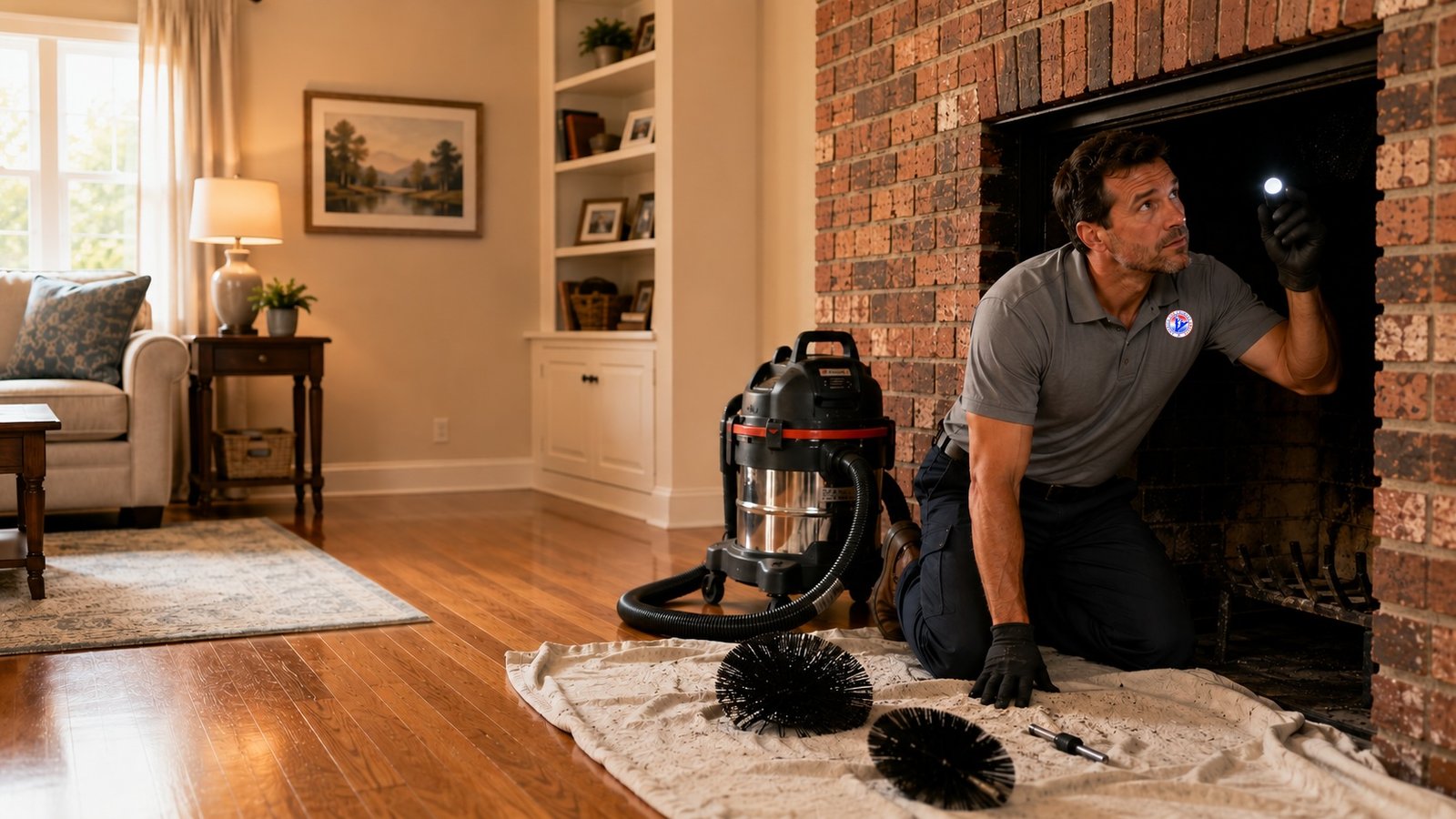
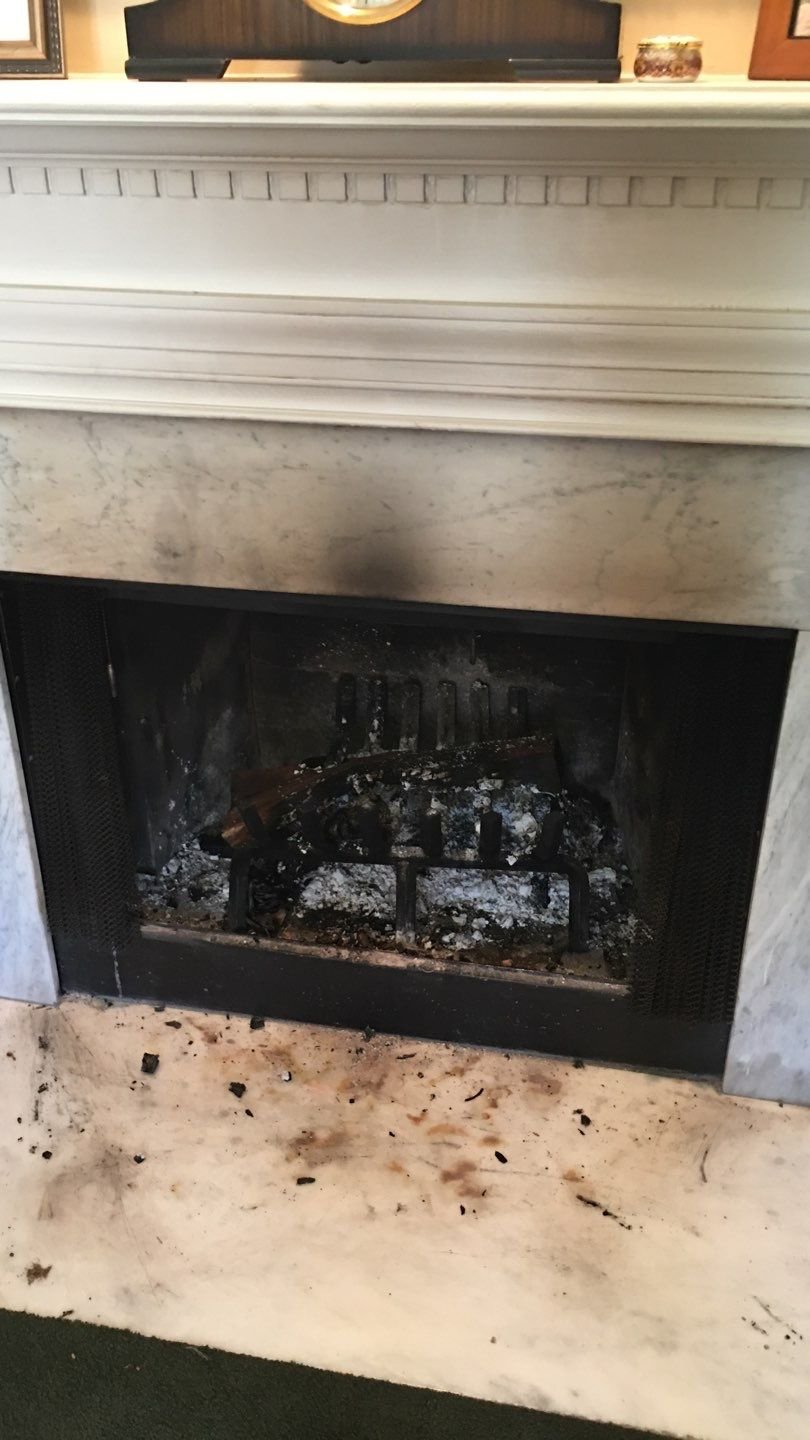
A fireplace that pushes smoke into the room instead of up the chimney is one of the most common problems we see across Northern Virginia – and one of the most misunderstood. The chimney is a machine that runs on heat: hot smoke is lighter than outside air, and that difference is the engine (the “draft”) that lifts smoke out of your home. Anything that cools the smoke, blocks its path, or fights the airflow weakens that engine. Here are the real reasons fireplaces smoke, in the words homeowners ask us.
America One Chimney Sweeps (America One Inc., Virginia Class A Contractor License #2705175986) diagnoses and repairs smoking fireplaces throughout Northern Virginia.
Why does smoke pour into the room when I first light a fire?
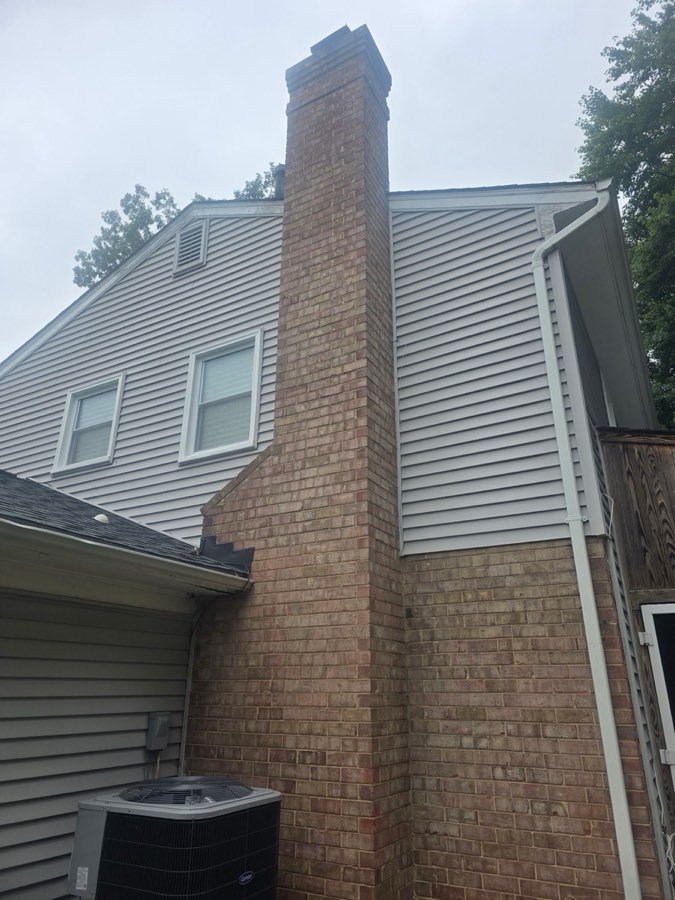
Nine times out of ten it is a cold chimney. Draft – the upward pull that carries smoke out – only exists when the air in the flue is warmer than the air outside. A chimney on an outside wall sits full of cold, heavy air that acts like a stopper, and your first minutes of fire have to push that plug out before anything flows upward. Until it clears, smoke takes the easy exit: into your living room. Warming the flue first – burning a rolled newspaper held up near the damper for a minute – clears the plug before you light the real fire. Chimneys that run up through the middle of the house stay warm and rarely have this problem; ones on exterior walls almost always do.
Why does my fireplace only smoke on windy days?
That points to what is happening above your roof, not inside your chimney. Wind rolling over a roofline creates swirling, turbulent air on the downwind side, and if your chimney top sits inside that turbulence – too short, below the ridge, or near a taller section of roof, a dormer, or big overhanging trees – gusts can literally push air down the flue. Building code addresses this with a height rule: the chimney must rise at least 3 feet above the roof where it exits and stand 2 feet taller than anything within 10 feet of it. A chimney that misses that standard often behaves fine on calm days and smokes on windy ones. Fixes range from a draft-correcting cap in mild cases to extending the chimney height.
Could my kitchen or bathroom fan be making my fireplace smoke?
Absolutely – and this one surprises people. Your chimney and your exhaust fans are competing for the same air. A kitchen range hood, bathroom fans, a running clothes dryer, or a whole-house fan all blow air out of the house, and that air has to come back in from somewhere. In a tightly sealed modern home, the easiest path in is often straight down the chimney – which means your fireplace runs in reverse. Fireplaces in basements are especially prone, since basements sit in the low-pressure zone of the house. If your fireplace smokes mainly when certain appliances run, try cracking a nearby window a couple inches when you burn. If that cures it, the diagnosis is house pressure, not the chimney.
Does wet firewood really make that much difference?
More than almost anything else you control. Wood that has not been properly dried spends most of its fire energy boiling off internal moisture, so the fire smolders instead of roars. A smoldering fire makes cool, heavy smoke – and cool smoke does not want to rise. It drifts, stalls, and spills. Wet wood is also a creosote machine, because that cool, damp smoke condenses on the flue walls on the way up. Burn seasoned wood that has dried at least a year, and favor dense hardwoods like oak, hickory, and maple, which burn hotter and keep the chimney pulling strongly. If your fires hiss, bubble at the log ends, or need constant relighting, your wood is telling you it is wet.
My fireplace opening is big – could that be why it smokes?
Yes. A fireplace and its flue have to be matched in size, like a funnel and its spout. The rule of thumb built into residential code: the flue passage needs to be about one-tenth to one-twelfth the area of the fireplace opening. A grand, oversized, or custom opening pulls in more room air than the flue above it can physically carry away, and the overflow comes back out as smoke – worst when the fire is big or the chimney has not warmed up. The simplest fix is often a smoke guard, a metal strip across the top of the opening that effectively shrinks it and rebalances the system. The full fix for chronic cases is resizing the opening or the flue.
What problems inside the chimney itself cause smoking?
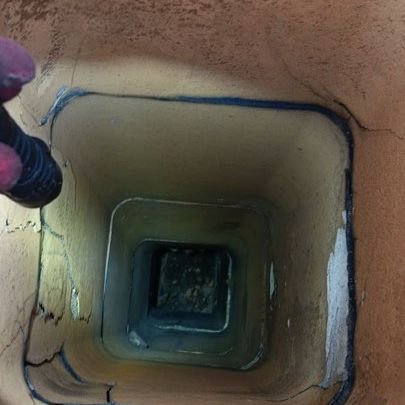
The flue works like a straw – it needs to be smooth, sealed, and continuous to hold suction. Gaps between flue tiles, cracked or shifted tiles, and mortar globs sticking into the passage all break that seal or create turbulence that robs the smoke of its upward momentum. Above the firebox, the smoke chamber – the funnel that squeezes smoke into the flue – is a frequent offender: older chimneys often have rough, stair-stepped brick there instead of the smooth parged surface code requires, and smoke tumbles instead of flowing. Even a deteriorated firebox works against you, because missing firebrick and crumbled joints bleed heat away from the fire, cooling the smoke that needed to stay hot to rise. These are exactly the defects a camera inspection finds.
Can a dirty or blocked chimney make my fireplace smoke?
Very commonly. Bird and animal nests, leaves, fallen tile pieces, and debris on the hidden smoke shelf behind the damper all choke off the passage – sometimes completely, as with a raccoon nest or, unpleasantly, a dead animal. Creosote buildup does the same thing gradually: as deposits thicken, the flue’s usable diameter shrinks, friction rises, and draft weakens – and that same buildup is the fuel for a chimney fire, so a smoking fireplace and a dangerous one often have the same cause. A chimney cap with clogged or too-fine mesh can strangle airflow from the top as well. This whole category is the easiest to fix: a sweep and clear-out restores the passage, and a proper cap keeps the wildlife out.
Is it just my damper?
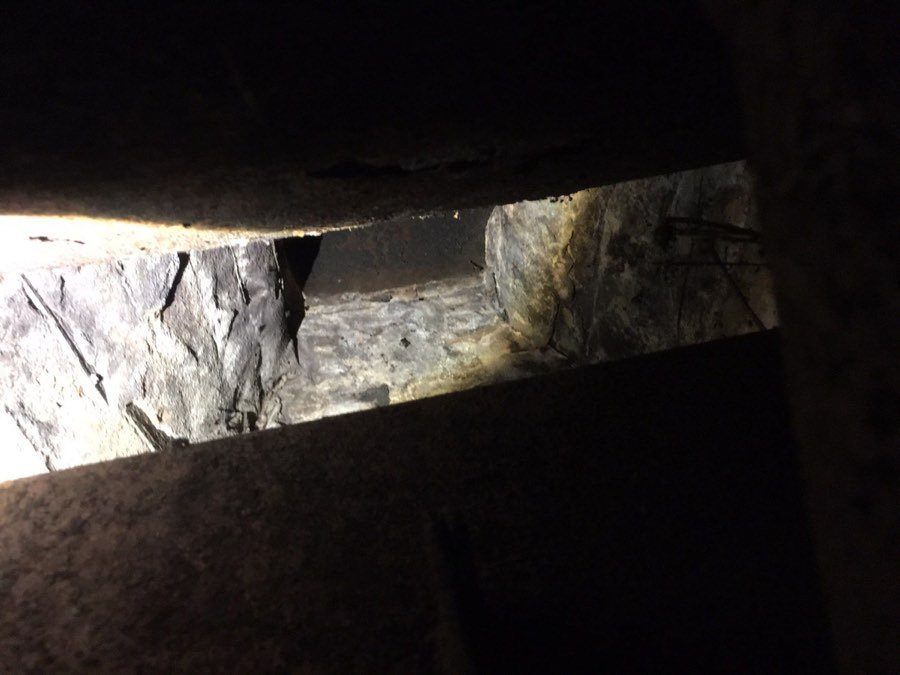
Sometimes the answer really is that simple. A damper that is only partly open, rusted, warped, or blocked chokes the exact spot where all the smoke must pass. Glass doors closed at the wrong time and overly restrictive spark screens can starve the fire of the room air it needs to push smoke upward. It is worth a flashlight check before anything else: open the damper fully, make sure it moves freely and seats properly, and confirm nothing is lodged around it. If the damper is corroded or stuck, replacing it is a straightforward repair – and a top-sealing damper can solve the problem while also keeping cold air out when the fireplace is idle.
How do you figure out which of these is causing MY fireplace to smoke?
By looking, not guessing. Several of these causes produce identical symptoms, and homes often have more than one at work – a cold exterior chimney plus a tight house plus a rough smoke chamber, for example. A Level 2 inspection settles it: a camera travels the full flue and shows the actual condition of the tiles, joints, smoke chamber, and damper, while we evaluate the chimney height, the opening-to-flue proportions, and how the house itself breathes. Then the fix matches the cause – a sweep, a cap, a smoke guard, parging the smoke chamber, an insulated liner, or extending the height. What we never recommend is guessing with trial-and-error fixes on a system you burn fires in.
Tired of a smoky fireplace? Ask Ember in the chat window, request service online, or call (703) 789-3639, Monday-Friday 8:00 AM-5:00 PM. Related: Chimney Fires: Warning Signs, Damage & Repair.