
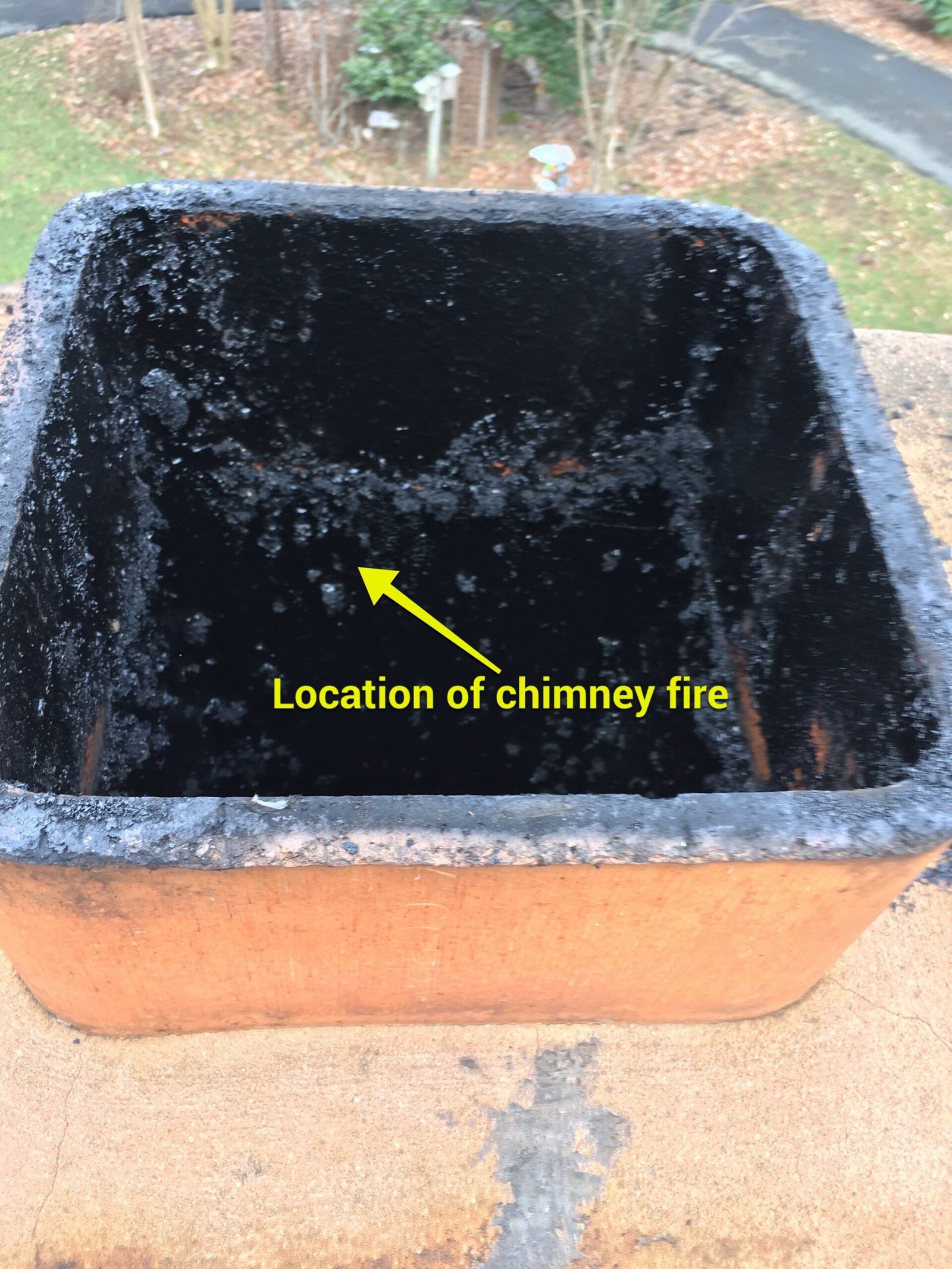
A chimney fire is exactly what it sounds like: a fire burning inside the chimney itself, fueled by the creosote your fireplace or wood stove left behind. Some are violent and unmistakable; many are quiet and discovered only later. This guide – based on research published by the Chimney Safety Institute of America – covers how chimney fires start, the warning signs during and after, what the heat does to your flue, and how the damage is repaired.
America One Chimney Sweeps (America One Inc., Virginia Class A Contractor License #2705175986) serves Northern Virginia with chimney sweeping, Level 2 camera inspections, FireGuard ceramic relining, and stainless steel liner installation.
What actually causes a chimney fire?
Creosote – smoke that condensed inside your flue instead of escaping. Every wood fire deposits some, but slow, air-starved fires deposit the most: an airtight stove damped down for an overnight burn is the classic creosote factory, and cold exterior chimneys collect it fastest. When enough creosote builds up and a hot fire pushes flue temperatures high enough, the deposit itself ignites – and now there is a fire burning inside a passage that was only designed to carry smoke.
What does a chimney fire look and sound like?
The dramatic ones announce themselves: a low roar or rumble, crackling and ticking as creosote flakes burn and metal expands, a stovepipe that vibrates or glows red, smoke or even flame puffing back into the room, and flames or sparks shooting from the top of the chimney. If any of this is happening right now, get everyone out of the house and call 911 first. Call us after the fire department – that is the right order.
Can I have a chimney fire without knowing it?
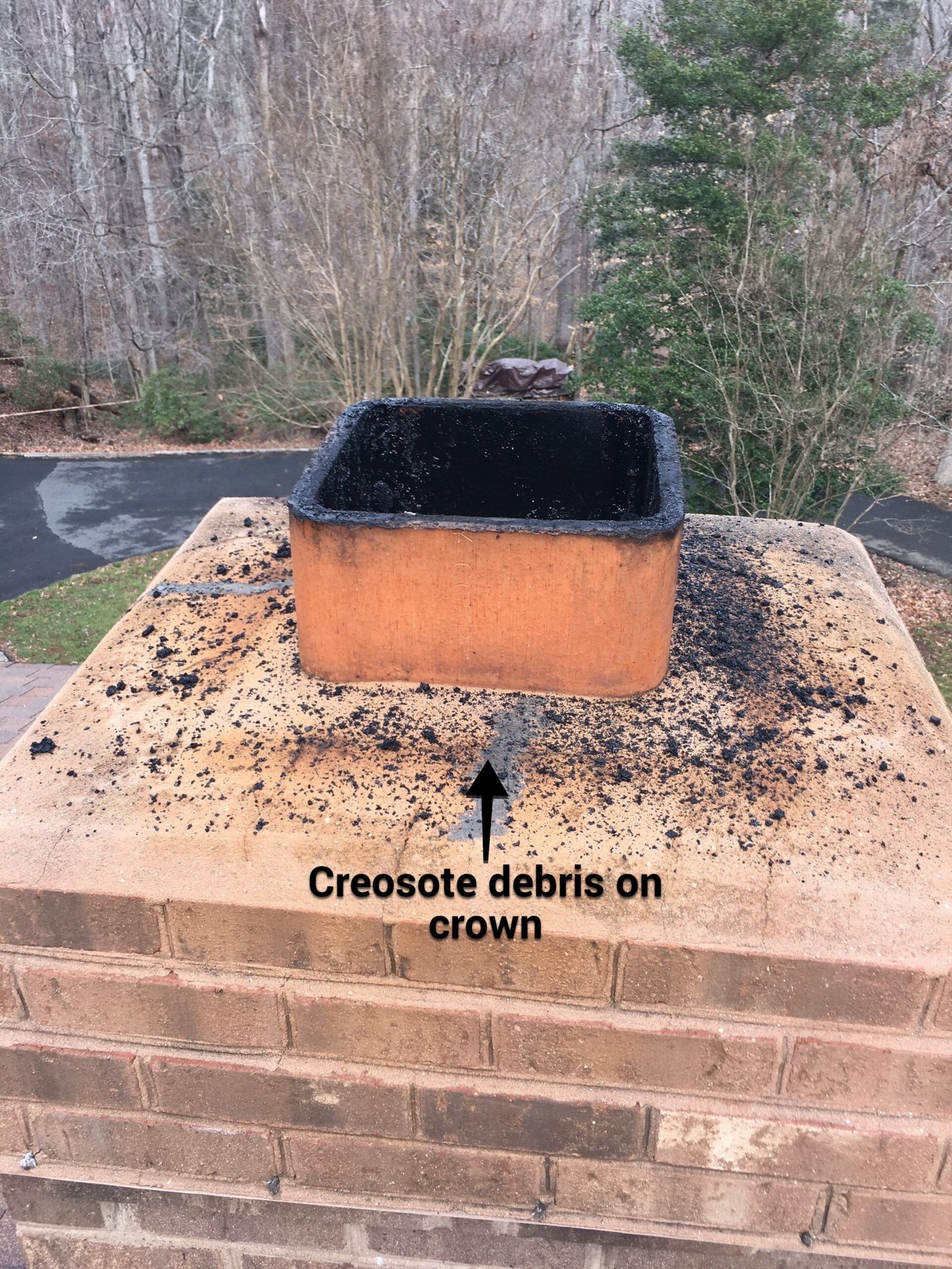
Yes. Many chimney fires are slow, quiet burns that the family never notices. The evidence shows up later: puffy, honeycomb-looking “expanded” creosote in the flue, burned creosote flakes on the roof or lawn, cracked flue tiles, or stretches of flue burned strangely clean. Finding that evidence is one of the main reasons annual chimney inspections exist – quiet chimney fires often come to light only during a routine sweep or camera inspection.
How hot does a chimney fire get?
Laboratory measurements put flue gas temperatures around 2,000 degrees F during a chimney fire, with liner surfaces reaching 1,500-1,700 degrees. Chimneys are designed for continuous flue gases of about 1,000 degrees – a chimney fire roughly doubles that, suddenly. The danger is not just the peak temperature but the speed: that thermal shock is what cracks clay flue tiles, and heat driven through the chimney walls can ignite hidden framing beside the chimney, sometimes hours after the fire seemed to be over.
Is it safe to use my fireplace after a chimney fire?
No – not until the flue has been inspected. A chimney fire routinely cracks flue tiles and opens mortar joints, and a cracked flue can leak heat and carbon monoxide into the house on the next fire. The NFPA 211 standard requires a damaged liner to be repaired, relined, or replaced before further use. A Level 2 camera inspection travels the full length of the flue and documents exactly what the fire did.
Does homeowner’s insurance cover chimney fire damage?
Often, yes. A chimney fire is a sudden fire event, and many homeowner’s policies treat the resulting damage under their fire coverage – though every policy is different, so confirm with your insurer. What we contribute is the documentation: our Level 2 camera inspection produces video footage and a written report showing the damage, which is exactly what an insurance adjuster needs to evaluate a claim.
How is chimney fire damage repaired?
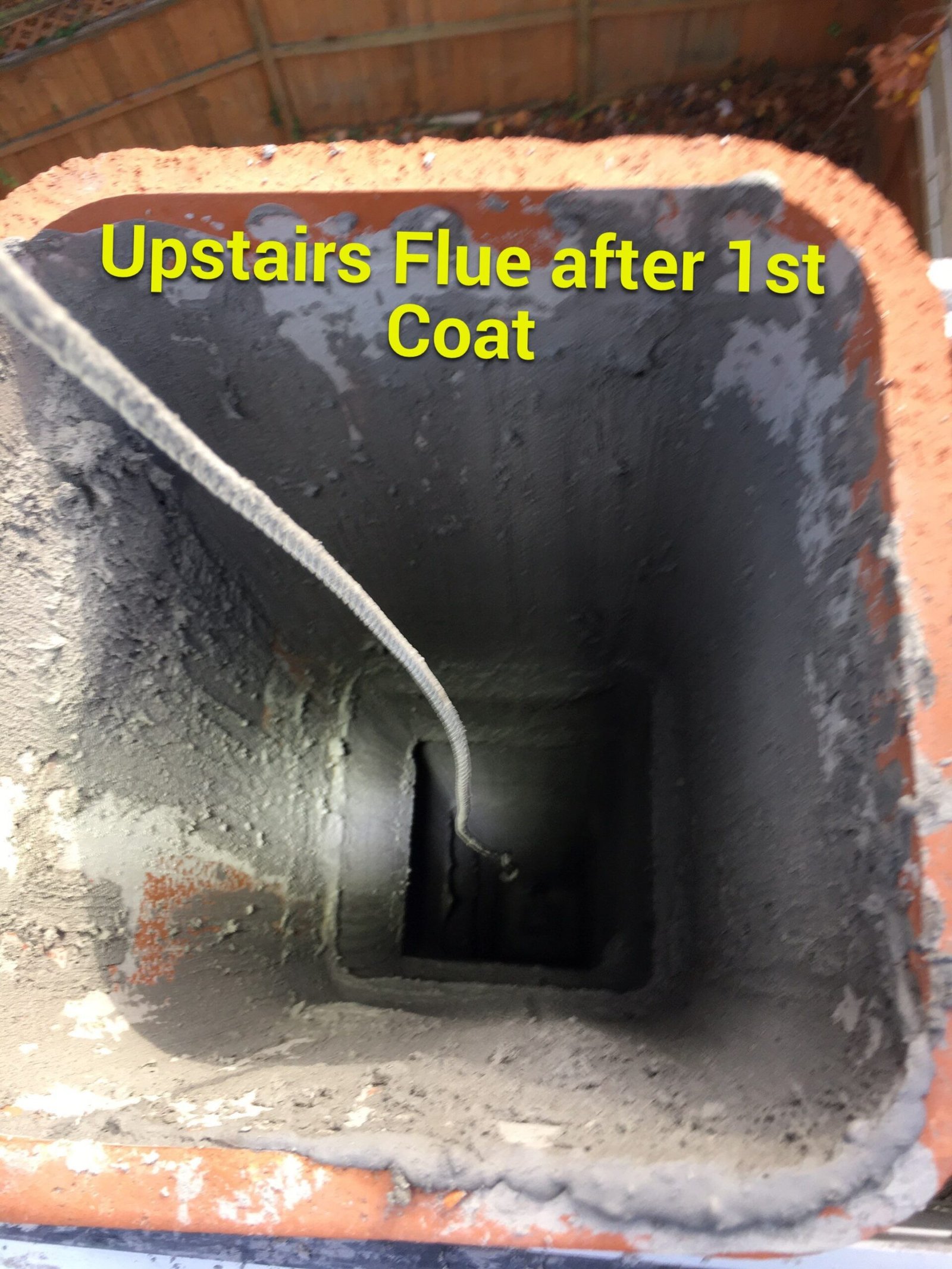
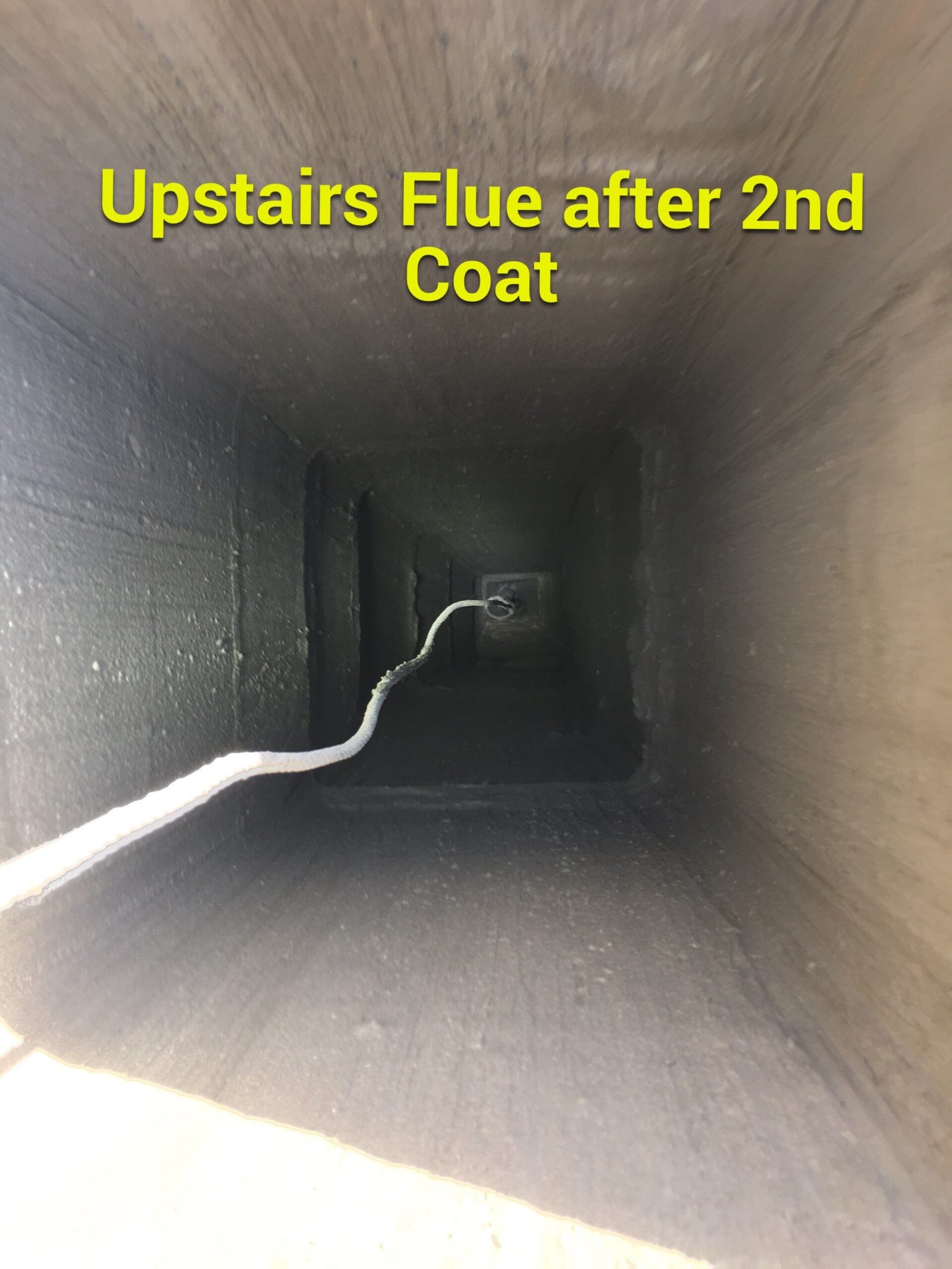
Our specialty is the FireGuard Chimney Re-Lining System – we are certified FireGuard installers, and the system is only available through approved contractors. FireGuard is a certified ceramic resurfacing and mortar joint repair system, applied with a specialized vibration process that drives pure ceramic into cracked tiles, open mortar joints, and misaligned liners, sealing the flue in place. It is rated to 3,205 degrees F – the highest in the industry – typically costs less than a full reline, keeps the flue at its original size so fireplace performance does not change, and is usually finished in under a day. Mortar joint repairs carry a lifetime transferable warranty against material failure. If the damage is too great for in-place repair, we install stainless steel liners as well.
How do I prevent chimney fires?
Three habits cover most of it. Burn dry, seasoned wood – wet wood smolders, and smoldering makes creosote. Avoid long air-starved burns; a stove damped all the way down overnight builds creosote fastest. And have the chimney swept and inspected once a year, as NFPA 211 recommends – the fuel for a chimney fire is removable, and a flue without heavy creosote has nothing to burn.
Think you may have had a chimney fire? Do not light another fire until the flue has been inspected. Ask Ember in the chat window, request service online, or call (703) 789-3639, Monday-Friday 8:00 AM-5:00 PM. Related guides: Creosote: The 3 Stages and Why Does My Fireplace Smoke Into the Room?