
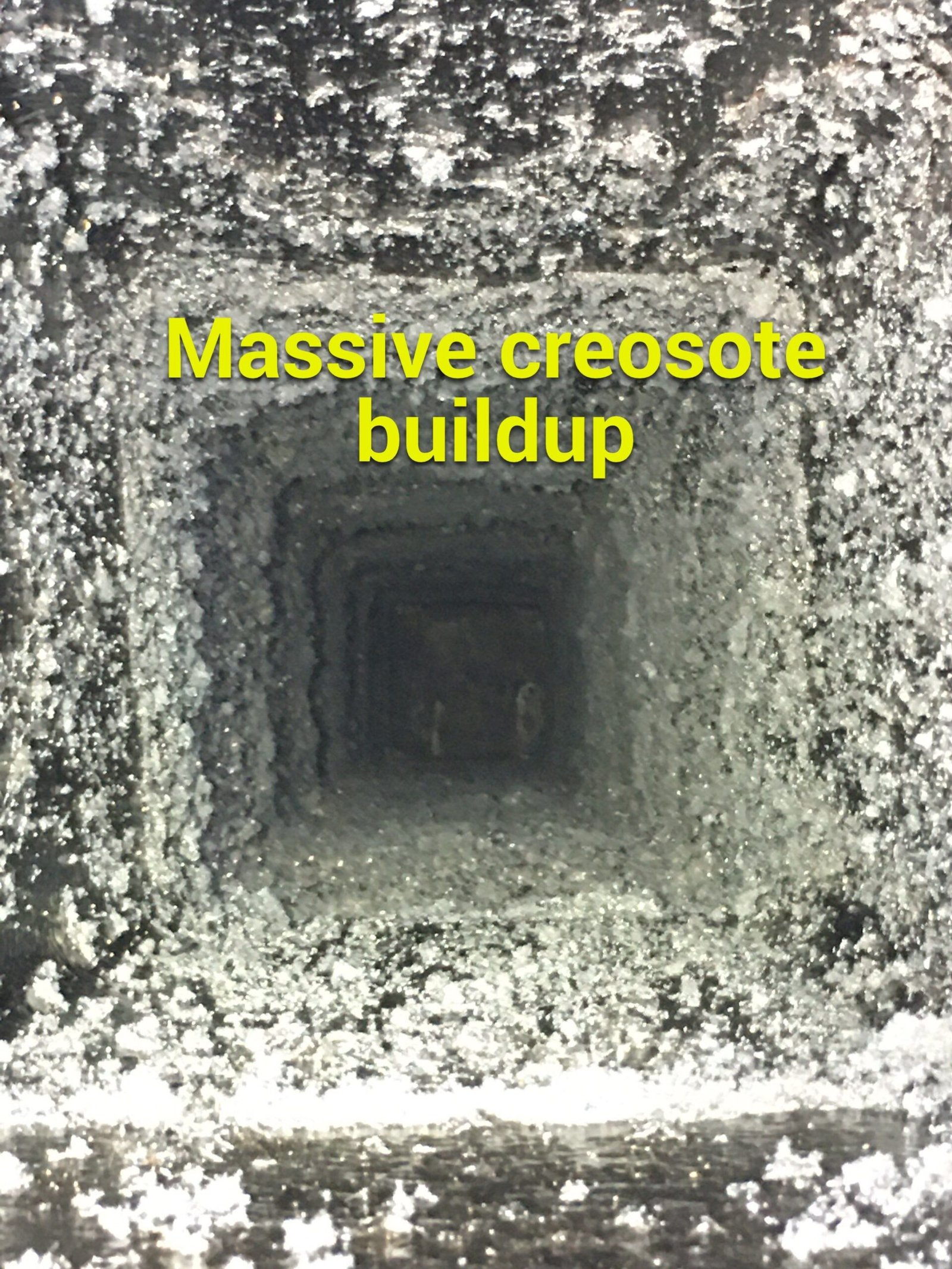
Creosote is the reason chimney sweeping exists. It is the flammable residue that wood smoke leaves inside your flue, it builds silently with every fire, and it is the fuel for nearly every chimney fire we see. But creosote is not one thing – it comes in three distinct stages, from harmless-if-cleaned soot to a glassy hardened fuel that cannot be brushed away. Here is what every wood burner in Northern Virginia should know about it.
America One Chimney Sweeps (America One Inc., Virginia Class A Contractor License #2705175986) sweeps, treats, and repairs wood-burning chimneys throughout Northern Virginia.
What is creosote, exactly?
Creosote is smoke that never made it out of your chimney. Every wood fire releases a mix of gases, tar vapors, and unburned particles, and whatever the flames do not consume rises into the flue. If the chimney is warm and the fire is hot, most of it escapes out the top. But whenever the smoke cools on its way up, those vapors condense on the flue walls the way steam fogs a cold mirror – and the residue they leave behind is creosote. It builds in layers, fire after fire, and because it is concentrated wood tar, it is fuel. Every wood-burning chimney makes some; the question is how much, and what stage it has reached.
What are the three stages of creosote?
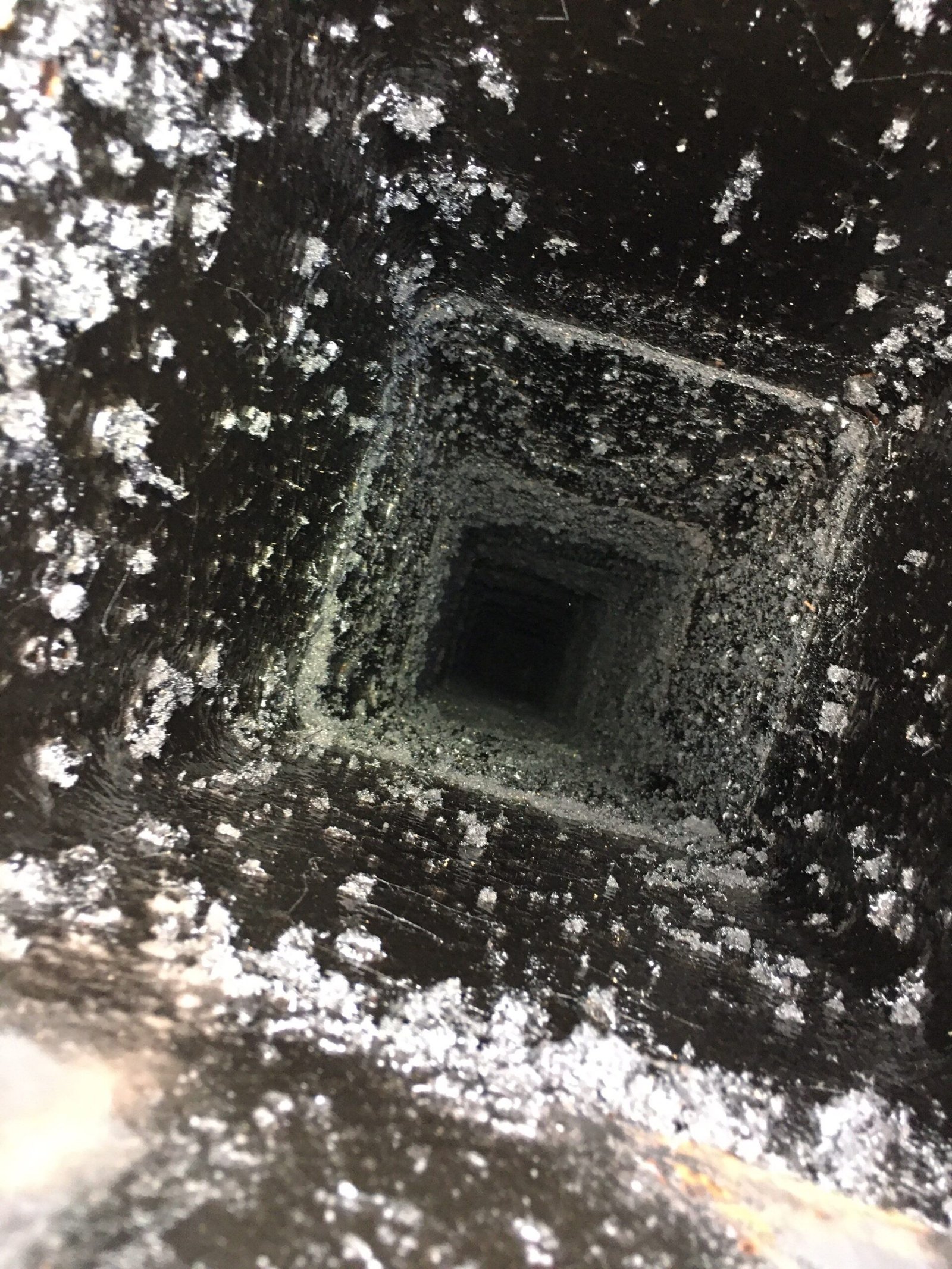
Stage 1 is soot: dry, dusty, and loose, like charcoal powder. It brushes out easily with a routine sweep – this is the stage you want to catch. Stage 2 is tar: sticky, gooey when fresh, hardening into leathery layers that a standard brush smears instead of removes. It takes heavier mechanical cleaning. Stage 3 is glaze: a shiny, black, almost ceramic coating fused to the flue walls – the end product of many cool, smoldering fires layered and re-baked over time. Brushes slide right over it. Each stage holds more concentrated fuel than the last, burns hotter if it ignites, and costs more to remove – which is the whole argument for annual sweeping while it is still Stage 1.
How does creosote start a chimney fire?
Creosote ignites at around 451 degrees F – and it does not need a spark or a flame to touch it. Once any patch of buildup reaches that temperature, it begins burning on its own, and each burning patch heats the layer above it, which ignites next. The buildup acts like a fuse running up your flue. That is why chimney fires seem to come from nowhere: a homeowner burns a hundred quiet fires while creosote accumulates, then one ordinary evening – a load of extra-dry wood, a door left open a moment, a gust of draft – pushes flue temperatures past the threshold, and months of stored fuel ignite at once. The resulting fire can pass 2,000 degrees, far beyond what tiles, liners, or mortar are built to survive.
Why do slow, smoldering fires make more creosote?
Because creosote formation is all about temperature. Smoke starts condensing on flue walls when the gases cool below roughly 284 degrees F – and a choked-down, smoldering fire never gets the flue anywhere near hot enough to stay above that line. Damping a stove way down to stretch the burn feels thrifty, but it manufactures the exact conditions creosote needs: cool, dense, tar-heavy smoke drifting slowly up a cold flue. There is a simple tell at the chimney top: thin, clear vapor means a hot, clean burn with almost nothing left to condense; dark smoke means unburned fuel is going up the flue and much of it is sticking. Hot, active fires with seasoned wood are how you starve creosote.
What is glazed creosote, and why can’t it just be brushed out?
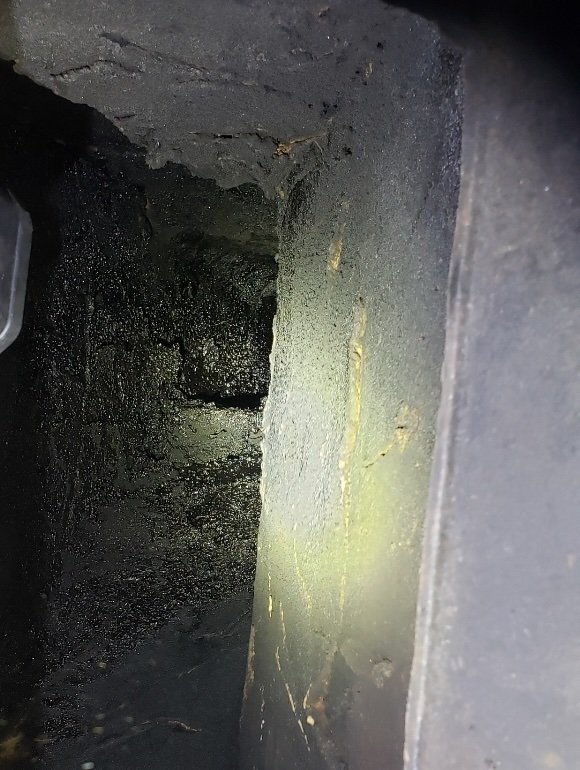
Glaze – Stage 3 – has been chemically transformed. Repeated cycles of condensation, reheating, and cooling cure those tar layers the way a kiln cures enamel: the molecules link into a dense, hardened, carbon-rich shell bonded to the flue. Bristles glide over it; even aggressive tools only chip at it. Removing it safely is a two-step job: first a chemical treatment that breaks down the hardened structure – neutralizing its acids and drying it out until the glaze turns brittle and chalky – then mechanical rotary cleaning to strip the weakened material without tearing up the liner. In severe cases, especially older clay flues where the glaze has done real damage, the honest answer is cleaning as much as possible and installing a new liner.
Why does my fireplace smell terrible in the summer?
That tar smell on muggy days is creosote off-gassing. Creosote absorbs moisture from humid air, and the dampness reactivates the acids and aromatic compounds inside it – the same way asphalt smells stronger on a hot day. Meanwhile, summer flips your house’s airflow: air conditioning and exhaust fans put the house under slight vacuum, and instead of air drifting up the chimney, the chimney becomes a straw pulling air – and odor – down into the room. Deodorizers only mask it. The real fixes are removing the creosote, and closing the pathway: a top-sealing damper shuts the flue off from the living space when the fireplace is idle, which also keeps conditioned air in.
Does wet firewood really cause creosote?
Directly. Wood needs an enormous amount of air to burn completely – about six and a half pounds of air for every pound of wood – and it needs heat. Wet wood sabotages both: the fire spends its energy boiling off internal moisture instead of igniting wood gases, temperatures drop, and the unburned tar vapors ride up the flue and condense. A fire that hisses and sputters is telling you it is making creosote. The same math applies to starving a fire of air – closed-down stove controls, or a tight house where exhaust fans steal the fire’s air supply. Seasoned wood, a hot active flame, and enough air are the three-legged stool of a clean burn.
How often should creosote be cleaned out?
The industry standard – NFPA 211 – calls for chimneys to be inspected annually and swept whenever buildup warrants it. For most regular burners that means a yearly sweep; daily winter burners and wood stove users often need more. But here is the professional’s secret: heavy creosote is a symptom, not just a mess. A chimney producing thick deposits is telling you something is wrong – an oversized or cold flue, weak draft, wet wood, smoldering operation. When we find heavy buildup, we work like detectives to find out why, because sweeping without fixing the cause just schedules the next buildup. Solve the draft and temperature problem, and the chimney nearly stops making creosote at all.
What does the fix look like for each stage?
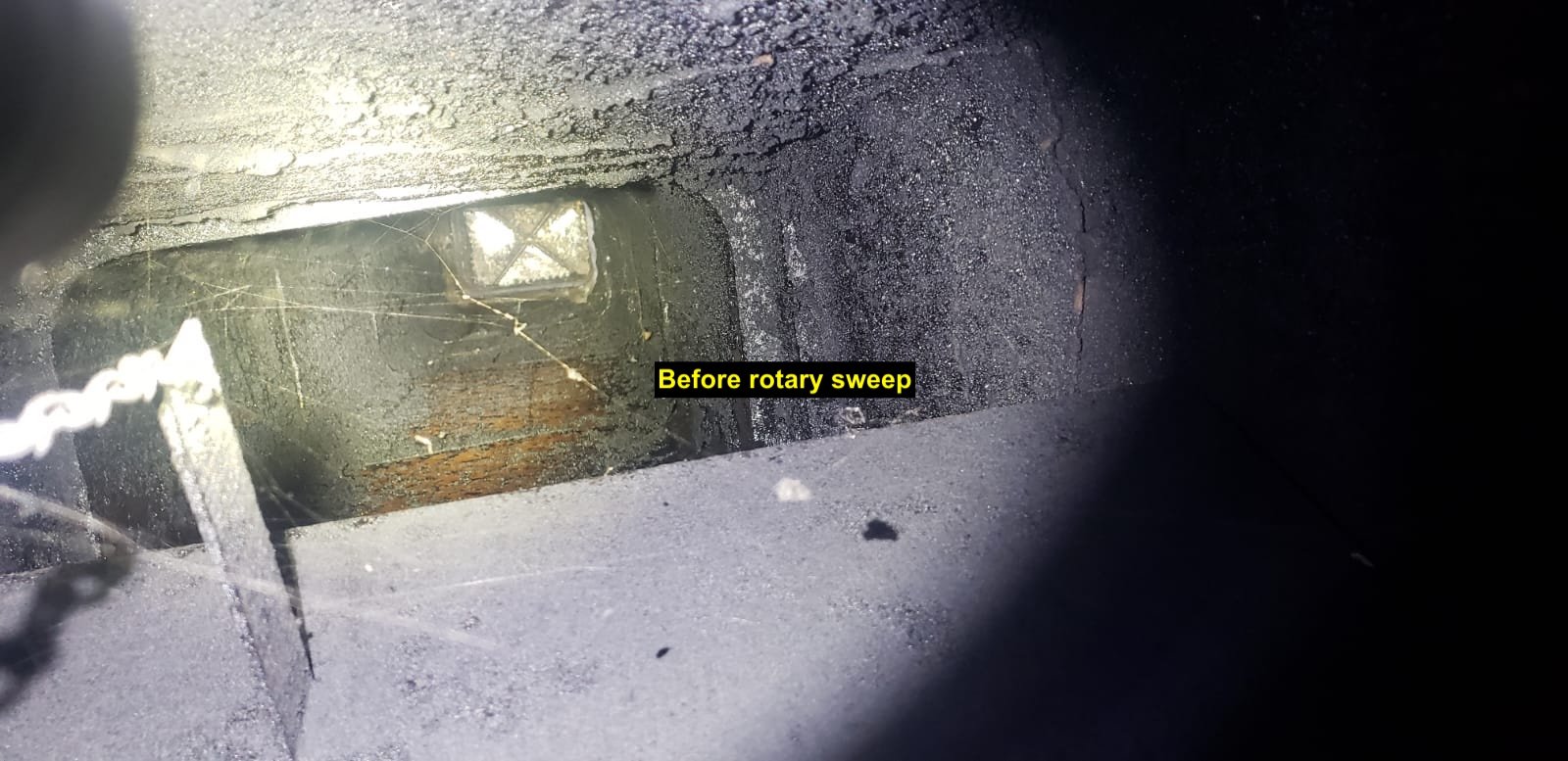
Stage 1: a standard professional sweep – quick, clean, done annually, it keeps you permanently out of trouble. Stage 2: heavier mechanical cleaning to strip the hardened tar layers. Stage 3: the chemical-then-rotary process to break down and remove the glaze – and if the glaze or the fires it fed have damaged the flue, relining comes into the conversation: our FireGuard ceramic system for repairing tile and joints in place, or a stainless steel liner where damage is too great. And in every case, we identify and correct what caused the buildup – because the goal is not a clean chimney today, it is a chimney that stays clean. If you cannot remember your last sweep, that is the sign to book one.
Overdue for a sweep? Ask Ember in the chat window, request service online, or call (703) 789-3639, Monday-Friday 8:00 AM-5:00 PM. Related guides: Chimney Fires: Warning Signs, Damage & Repair and Why Does My Fireplace Smoke Into the Room?