
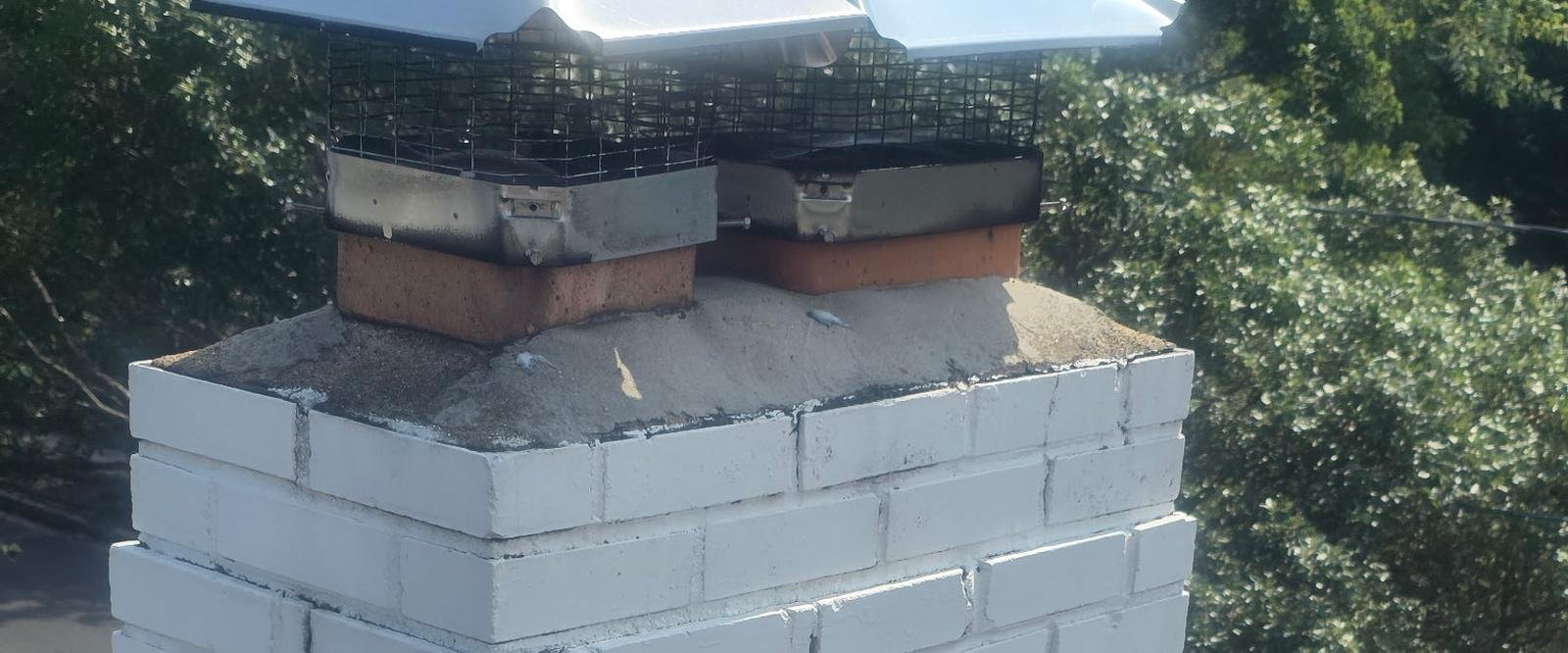
A leaking chimney almost never announces itself honestly. Water shows up as a ceiling stain, a musty smell, white streaks on brick, or a fireplace that smells like wet ash – while the actual entry point hides somewhere between the cap and the flashing. This guide walks through where chimney leaks really come from and how each one gets fixed, drawn from what we find on real roofs across Northern Virginia every week.
America One Chimney Sweeps (America One Inc., Virginia Class A Contractor License #2705175986) diagnoses and repairs leaking chimneys throughout Northern Virginia.
My ceiling is stained near the chimney – is the chimney leaking?
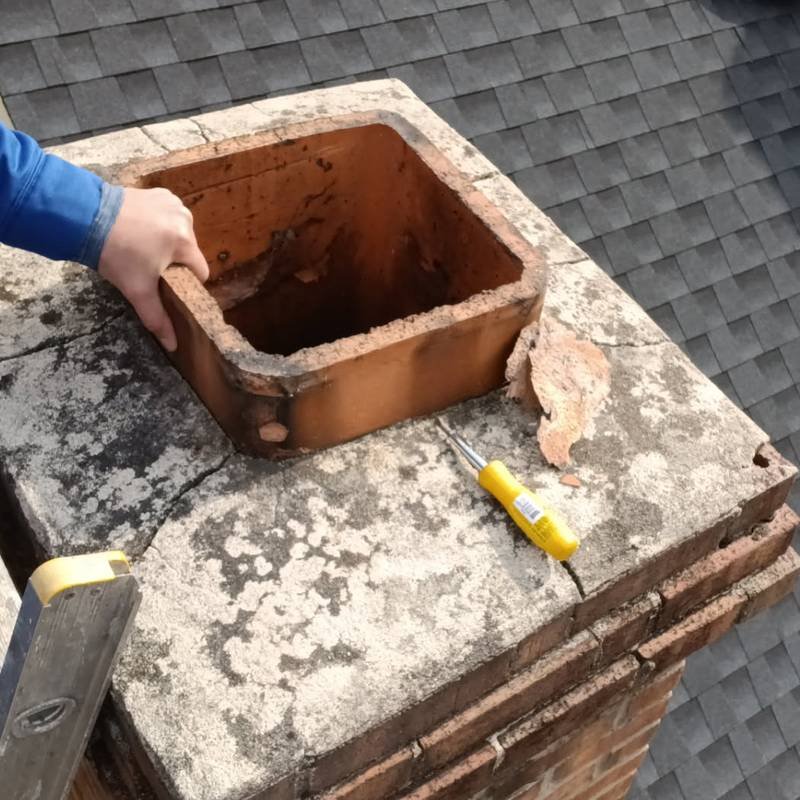
Maybe – and maybe not. Water is a traveler: it can slip in at a roof valley ten feet away, run along framing or sheathing, and surface as a stain right beside the chimney. That is why we diagnose with a controlled water test instead of guessing. A gentle hose spray, one zone at a time – first the chimney body down low, then the surrounding roof, then finally the crown and cap up top – while watching inside between stages. Wherever the water shows up, that zone is the culprit. It is methodical and unglamorous, and it beats paying for chimney work when what you needed was a roofer, or the other way around.
What are the white chalky streaks on my chimney bricks?
That is efflorescence – mineral salts that water dissolved inside the masonry and left behind on the surface when it evaporated. Read it as a message: water is moving through your chimney. On gas flues it often means acidic condensation forming inside the flue; on wood-burners it usually means rain is getting in from outside through a cracked crown, failing cap, bad flashing, or thirsty brick. The streaks themselves wash off; the message should not be ignored. Stop the water first, let the chimney dry, and the efflorescence quits coming back – then a breathable water repellent keeps the bricks from drinking again.
What is a chimney crown, and what are the issues with them cracking?
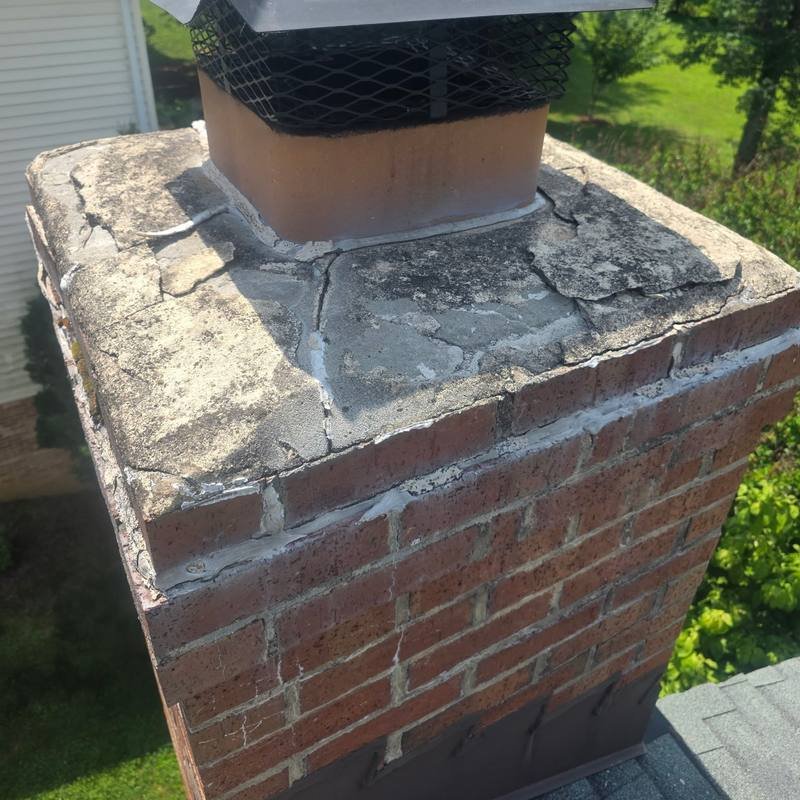
The crown is the concrete lid across the top of your chimney, and it lives a hard life – baking sun, freezing rain, and heat from every fire. A proper crown is dense concrete at least two inches thick at the edge, sloped so water runs off, overhanging the brick by a couple of inches with a drip groove underneath so runoff falls clear of the chimney face. What many chimneys actually have is a thin smear of leftover mortar – a “wash” – that was never built to shed water. Either way, once hairline cracks open, every rain soaks straight into the chimney core, and each winter’s freeze-thaw cycles pry the cracks wider. Crown repair or a rebuilt crown closes the single most direct water path a chimney has.
Can rain really fall straight down my chimney?
An uncapped flue is an open hole in your roof – every storm drops water directly onto your damper, smoke shelf, and firebox, and the flue soaks it up like a cold sponge. That is why some fireplaces smoke badly for days after rain: the chimney has to dry out before it can warm up. Caps fail quietly, too – slip-in caps work loose in the wind, rusted caps drip through, and even a good cap lets some sideways, wind-driven rain through its mesh in a strong storm, since the mesh has to stay open for the chimney to breathe. A properly sized, corrosion-resistant cap that is fastened down – with a generous top plate to shrug off crosswinds – is the cheapest insurance a chimney can buy.
Why does my chimney only leak during heavy storms?
Storm-only leaks usually point to flashing – the metal weatherproofing where chimney meets roof. Done right, step flashing weaves into every shingle course, and counter flashing locks into a groove cut into the mortar joint. The common shortcut is metal nailed flat against the brick with a bead of caulk on top – and caulk always dries, cracks, and lets go, opening a gap that cascading water finds in the heaviest rain. Wide chimneys have a second problem: anything 30 inches or wider on the uphill side needs a cricket, a small peaked diverter that splits the water around the chimney. Without one, water ponds behind the stack and works its way in. Light rain sheds fine; a downpour finds every one of these weaknesses.
We only burn gas – why is our chimney wet?
Because gas makes water. Burning natural gas produces roughly a gallon of water vapor for every 100,000 BTUs – that is what combustion is. In a correctly sized, insulated liner, that vapor rides out the top as vapor. But when a small gas appliance exhales into a big, cold, uninsulated masonry flue, the exhaust cools fast, hits its dew point, and the vapor turns back into liquid inside your chimney – now mildly acidic, and it runs down the flue eating mortar joints and tile as it goes. Dripping sounds, dampness around the fireplace, and efflorescence with no roof leak in sight are the tells. The fix is a properly sized, insulated stainless steel liner that keeps the exhaust warm to the top.
Can the bricks themselves be the leak?
Yes. Brick and mortar are porous – they drink water through capillary pores like a sponge, swelling slightly wet and shrinking dry until the bond between them starts to let go. In our freeze-thaw climate, trapped water ices up and pops the faces off bricks – that flaking is called spalling. And here is the part most people do not know: unlike the brick walls of your house, chimneys have no weep holes. Water that soaks in has no drain – it just sits in the masonry. The remedy is repointing eroded joints, then a breathable masonry water repellent: it blocks liquid water from soaking in while still letting trapped vapor escape. Never use a film-forming sealer that traps moisture inside the brick – that makes spalling worse.
My chimney is the framed, siding-covered kind – where does water get in?
That is a prefabricated chimney chase, and its number one leak source is the chase cover – the metal lid on top. Original builder-grade covers are often galvanized steel that rusts, stamped flat so water pools instead of shedding, cut undersized, or missing the overhang and flared drip edge that make water fall clear of the siding. The second usual suspect is the storm collar, the small cone around the chimney pipe: its sealant cracks with years of heat cycling, and water slides right down the pipe into the chase. Because the chase is wood-framed, these leaks rot the structure quietly for years before anything shows. The fix is a properly fabricated stainless cover – cross-broken to shed water, overhanging with a drip edge – and a resealed collar.
What happens if I ignore a small chimney leak?
Chimneys take water damage twice. Structurally: joints wash out, brick faces spall off, flue tiles crack wider, dampers and doors rust, and the smoke chamber’s coating loosens. And in performance: wet masonry is a heat sink, so your flue runs cold – and a cold flue means weak draft, smoky fires, and creosote condensing at double speed. Damp creosote even turns acidic and corrodes metal parts. That is the quiet chain: a hairline crown crack becomes a wet chimney, becomes a smoking fireplace, becomes a creosote problem. Chimneys rarely fail all at once – they fail a little more every wet season, where you cannot see it.
How do you find MY leak – and what does the fix look like?
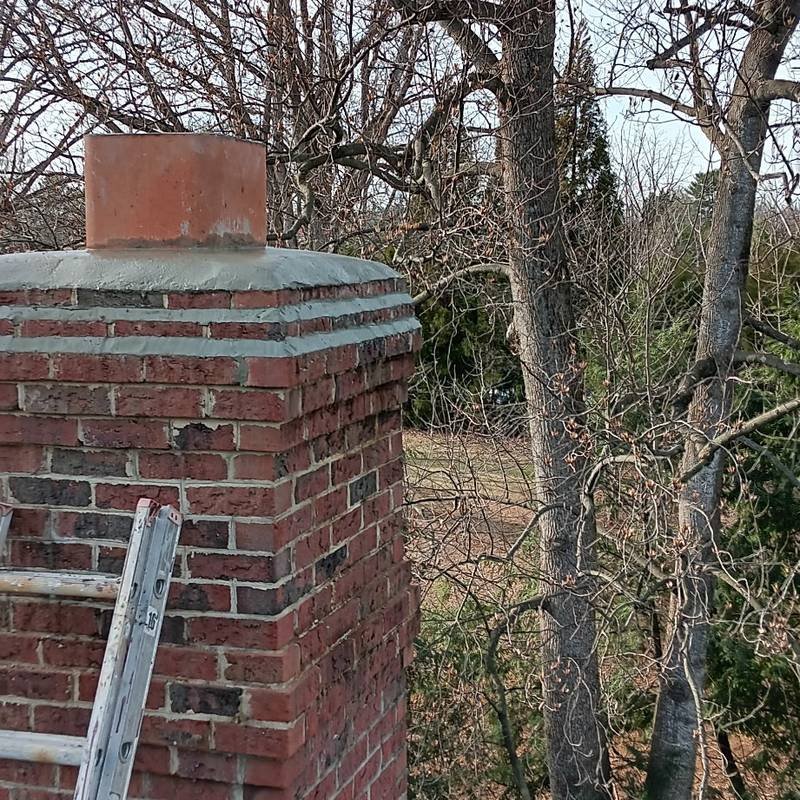
We isolate it, then fix exactly what failed – no guessing, no bucket of caulk. The bottom-up water test tells us which zone lets water in, and a camera inspection shows what it has already damaged inside. Then the repair matches the cause: a proper cap for an open or failed top, crown repair or a rebuilt crown, regletted flashing and a cricket where the roofline is the problem, repointing plus breathable water repellent for thirsty masonry, an insulated liner where gas condensation is the culprit, or a stainless chase cover and storm collar for prefab chases. One diagnosis, one targeted fix – and the leak stays fixed.
Chimney leaking? Ask Ember in the chat window, request service online, or call (703) 789-3639, Monday-Friday 8:00 AM-5:00 PM. Related guides: Why Does My Fireplace Smoke Into the Room? and Chimney Fires: Warning Signs, Damage & Repair.