
The five-gallon bucket
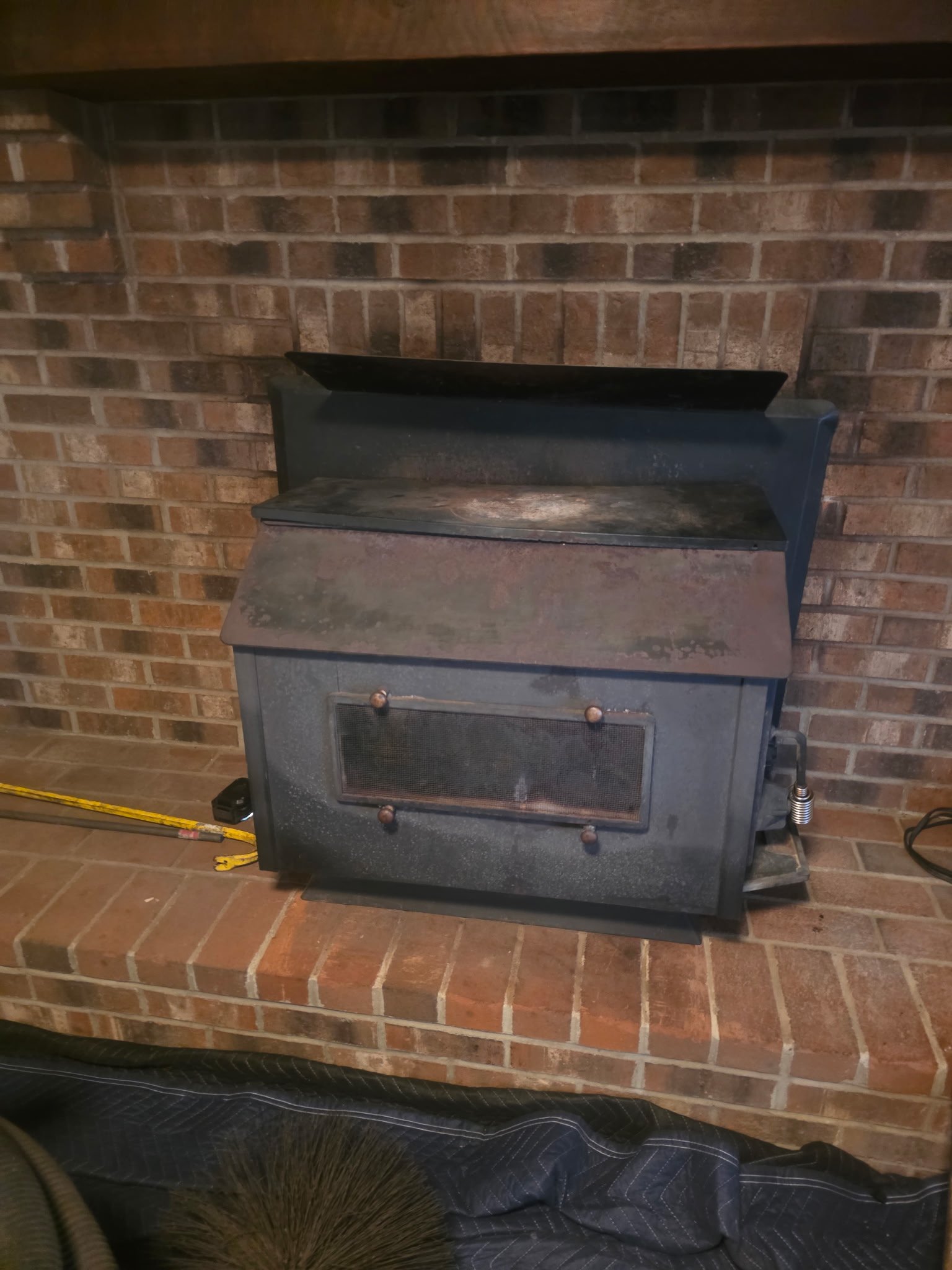
A customer in Dale City called us for a routine sweep on a wood stove insert that came with the house. Previous owner installed it himself some
time in the Reagan administration. “Burns great,” the new owner told us. “We use it every night.”
We pulled the insert to service the chimney behind it — and stopped.
The insert had been shoved into the old open fireplace with no liner at all. A “slammer,” we call it in the trade. The stove’s exhaust had been dumping into that huge open masonry chimney for decades, and every cubic foot of it was doing exactly what warm smoke does in a cold oversized flue: slowing down, cooling off, and sticking.
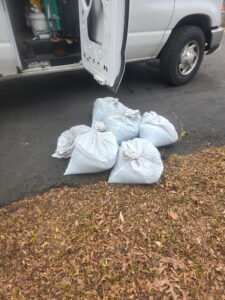
We scraped a full five-gallon bucket of creosote out of that chimney. Some of it flaky, some of it crunchy — and whole sections glazed over in the shiny, hardened, third-degree stuff that doesn’t brush off. The smoke shelf looked like it had been tarred.
That family was one hot fire away from the whole column lighting off. Every night. For years.
Two problems were stacked on top of each other in that house, and they’re the two problems this post is about: an old, dirty-burning stove, and no liner underneath it. Let’s take them one at a time.
What EPA 2020 actually changed
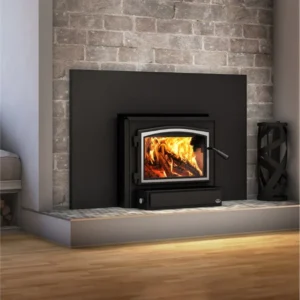 In May 2020, the EPA’s updated standards for wood-burning appliances took full effect. The short version: any new wood stove or insert sold in the U.S. must now emit no more than about 2 grams of smoke per hour.
For comparison, the old stoves still sitting in basements and fireplaces across Virginia — anything built before 1990, and plenty built after — put out 15 to 30 grams or more per hour. That’s not a small difference. That’s the difference between a stove that burns its own smoke and a stove that sends it up your chimney as fuel for the next chimney fire.
Modern certified stoves hit those numbers with smarter engineering, not smaller fires. Secondary combustion systems reburn the smoke — the gases and tar particles that old stoves waste — inside the firebox. Catalytic models push it further. Either way, the smoke that used to coat your flue gets burned for heat instead.
What that means for you, practically
More heat from less wood. Old stoves send half your woodpile up the chimney unburned. New EPA-certified stoves run in the 70-80 percent efficiency range. People who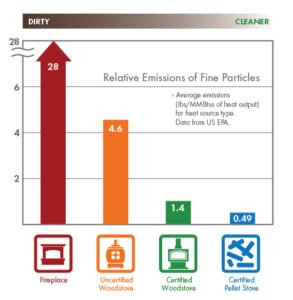 upgrade routinely tell us they’re burning a third less wood for the same warmth. Your back notices before your wallet does.
Dramatically less creosote. This is the part we see from inside the flue. Creosote is unburned smoke that condensed. A stove that emits 2 grams an hour instead of 25 simply has far less to deposit. Cleaner burn, cleaner chimney, safer house.
A glass window that stays clean, an overnight burn that actually works, and neighbors who don’t know when you’re burning — no more smoke column over the roof.
Possible money back. High-efficiency wood and pellet stoves have qualified for a federal energy tax credit in recent years — up to 30 percent of the cost. Rules change, so confirm the current credit with your tax professional before you buy, but ask your stove dealer about it. It’s real money.
One thing to be clear about: nobody is coming to take your old stove. The 2020 rules apply to what’s sold, not what you already own. But “legal to use” and “good idea to keep using” are two different things — and the chimney behind that old stove is usually where the difference shows.
The liner: the half of the upgrade nobody sees
Here’s the part that matters even more than the stove itself, and it’s the reason our Dale City story nearly ended in flames.
A wood stove or insert is designed to vent through a flue that matches its outlet — usually six inches. When an insert gets slammed into an open fireplace without a liner, its exhaust dumps into a masonry chimney with maybe ten times that cross-section. Physics does the rest:
The smoke slows to a crawl. A big flue means lazy draft. Lazy draft means smoke lingers.
The smoke goes cold. All that masonry soaks up the heat. Cold smoke can’t rise and can’t stay clean — the tar in it condenses on the brick, layer after layer, night after night.
The buildup hides. In a slammer install, the worst creosote packs onto the smoke shelf and the first few feet above the damper — exactly where you can’t see it and where a standard fireplace sweep can’t fully reach without pulling the insert. It builds for years in
the dark.
And when it lights, you have a chimney fire running inside unlined, decades-old masonry — cracked mortar joints, gaps between tiles, sometimes nothing between that fire and your framing but a couple inches of brick that was never meant to contain it.
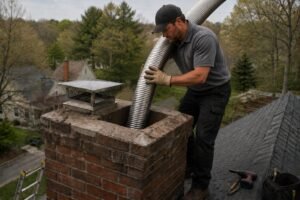
The fix is a full stainless steel chimney liner, sized to the appliance, running from the stove collar to the top of the chimney, insulated where the job calls for it. It keeps the exhaust hot and moving fast, which means better draft, easier lighting, less creosote by design — and a continuous sealed pipe between the fire’s exhaust and your house. This isn’t just our opinion: NFPA 211 and every insert manufacturer’s manual call for it. An unlined insert install fails inspection the moment we see it.
If you’re not sure what’s behind your insert, that’s an afternoon’s answer, not a mystery — we pull it, look, and tell you straight. It’s also why we price wood stove inspections with and without liners differently: an unlined system takes longer to inspect and sweep, because the creosote has had free run of the whole chimney.
The right way to do the whole job
If you’re running an old stove — especially one that came with the house — here’s the upgrade path that actually makes sense:
1. Inspect what you have. Liner or no liner, condition of the flue, condition of the stove. Fifteen minutes into a Level 2 inspection, you’ll know what you’re working with.
2. Sweep out the history. Whatever the old setup deposited comes out before anything new goes in. Sometimes that’s a bucket. Sometimes it’s five.
3. Upgrade the stove to an EPA 2020-certified unit sized for your space — bigger is not better with modern stoves; a right-sized stove run hot beats an oversized one run smoldering.
4. Line the chimney to match. Stainless liner, correct diameter, top to bottom. This is the step that makes everything above it work — and the step the previous owner skipped.
Do all four and you get a system that heats better, burns a third less wood, and builds creosote so slowly your sweep gets boring. That’s the goal: a boring chimney.
The bottom line
An old smoke dragon sitting on an unlined chimney isn’t a cozy antique — it’s a creosote factory venting into a masonry cavity that was never built for it. The stove wastes your wood, and the chimney quietly banks the difference as fuel.
Upgrade the stove, line the flue, and have the whole system inspected by someone who knows what a slammer looks like from above.
America One Chimney Sweeps is a licensed VA Class A Contractor (License #2705175986), serving Northern Virginia with certified chimney inspections, sweeping, and chimney relining.
We’d rather sell you a boring annual sweep than a rebuild.
Call us at 703-789-3639 to schedule your wood stove and chimney inspection.
0 Comments